- Home Repairs
- Roofing
- Windows
- Siding
- Gutters
- Doors
- Baths
- Financing
- Specials
- Careers - We're Hiring!
- Recent Projects
- Do It Yourself
- Pay Bill
- Customer Service
- Live Chat
- Refer A Friend
- Online Estimate

Few things are more frustrating during the summer than having a second floor that feels like a completely different climate than the rest of your home. You lower the thermostat, the air conditioner runs constantly, and yet the upstairs bedrooms remain warm and uncomfortable.
If you’ve wondered why your upstairs is so hot, the answer isn’t always simple. Many homeowners assume their air conditioning system is to blame, but several parts of your home work together to affect indoor comfort.
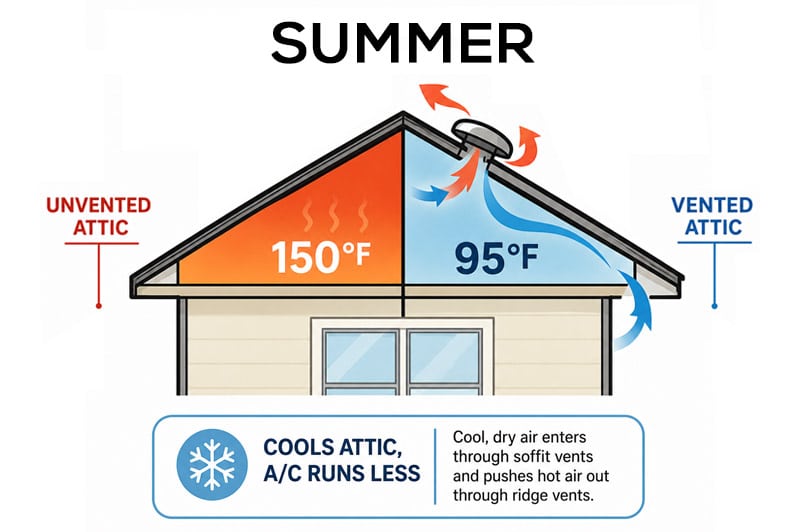
Heat naturally rises, which means upper floors are already at a disadvantage during warm weather. On top of that, the second floor sits directly beneath the attic, where temperatures can become significantly hotter than the outdoor air during summer months.
As your roof absorbs heat from the sun throughout the day, that heat transfers into the attic. If enough heat builds up, it can contribute to warmer temperatures in the rooms below.
The purpose of ventilation is to help manage the airflow, heat, and moisture within the attic space.
In a properly functioning system, cooler outside air enters through intake vents, typically located near the soffits, while warmer air exits through exhaust vents near the peak of the roof. This continuous airflow helps reduce heat and moisture buildup in the attic.
Proper ventilation is designed to help:
When heat builds up in a home there can be multiple factors involved, including:
It’s important to look at the entire home before assuming any single upgrade will eliminate the problem.
If your upstairs consistently feels hotter than the rest of the house, consider these questions:
If you’re planning a roof replacement, it’s an ideal time to review the attic ventilation system as part of the project. Because ventilation components are integrated into the roofing system, a roof replacement often provides the best opportunity to make ventilation improvements when appropriate for the home’s design.
Not every home requires ventilation changes, and not every comfort issue is caused by the roof. However, evaluating ventilation during a roof replacement can help ensure the roofing system is performing as intended.
If your upstairs is always hot, the attic may be contributing to the problem, but it’s rarely the only factor. Comfort is influenced by a combination of roofing, ventilation, insulation, HVAC performance, air sealing, and home design. Understanding how these systems work together is the first step toward identifying the true cause of the issue.
If you’re planning a roof replacement, it’s worth making sure your attic ventilation is working the way it ought to. Not just for comfort, but for the long-term health and performance of your roof as well.
PJ Fitzpatrick, LLC
Connect With Us
Check out our social pages or our reviews page and let us know how we’re doing!
Our Services
Our Latest Blog Post