- Home Repairs
- Roofing
- Windows
- Siding
- Gutters
- Doors
- Baths
- Financing
- Specials
- Careers - We're Hiring!
- Recent Projects
- Do It Yourself
- Pay Bill
- Customer Service
- Live Chat
- Refer A Friend
- Online Estimate

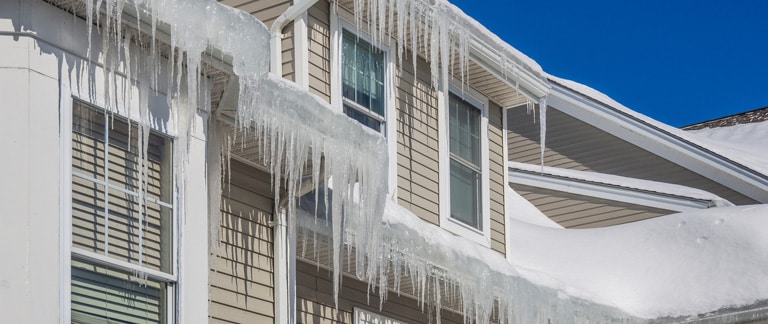
Ice damming can be a frustrating winter challenge for homeowners, often leading to concerns about roof performance and potential water damage. Understanding what causes ice dams and how to prevent them can help protect your home and provide peace of mind during the colder months.
Ice damming occurs when snow and ice build up along the edges of a roof, typically at the eaves, preventing melting snow from draining properly. As this trapped water backs up, it can seep under shingles and into the home, potentially causing interior water damage.
Ice dams develop due to temperature differences across your roof surface, which are influenced by conditions inside your home. Here’s how the process typically unfolds:
Warm air escapes from your living space into the attic due to gaps in insulation or air sealing. This warm air raises the temperature of the roof deck from underneath, even when outdoor temperatures are below freezing. Snow on the upper portions of the roof begins to melt from the bottom up. As the melted snow runs down toward the colder roof edges and gutters, it refreezes, forming a ridge of ice—the ice dam. Additional melting snow becomes trapped behind this ice barrier and can work its way under shingles, leading to leaks.
While ice dams appear on your roof, they’re actually telling you something about what’s happening inside your home. This is an important distinction because:
Roof shingles are designed to shed water that flows over their surface during normal conditions. They work exactly as intended when water drains properly. However, ice damming creates standing or backed-up water, which is a different situation altogether. Ice dams can occur on brand-new roofs and older roofs alike, and happen regardless of shingle brand, color, or manufacturer. The root cause relates to your home’s insulation, ventilation, and air sealing rather than the roofing materials themselves.
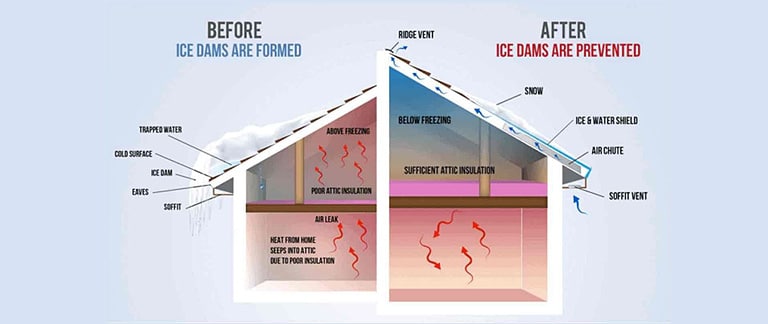
Several home conditions can contribute to ice dam formation:
The key to prevention is maintaining a cold, consistent temperature across your entire roof surface. Here are effective strategies:
Increase insulation levels to meet or exceed current building standards and ensure insulation is evenly distributed throughout the attic. Proper insulation helps keep warm air where it belongs—in your living space.
Identify and seal gaps around light fixtures, attic hatches, plumbing vents, and ductwork. Even small openings can allow significant warm air to escape into the attic.
All PJ Fitzpatrick roof systems include proper ventilation. A well-ventilated attic balances intake (soffit) and exhaust (ridge or roof vents), helping maintain consistent roof temperatures. Ensure vents remain clear and unobstructed.
Keep gutters clean to allow proper drainage, and when safe to do so, remove excessive snow buildup from roof edges.
PJ Fitzpatrick includes ice and water shield at roof edges on all our installations. While this protective layer doesn’t prevent ice dams from forming, it does provide an added barrier that helps reduce the risk of interior damage if ice damming occurs.
An insulation assessment can identify specific areas where heat loss is occurring. Contact PJ Fitzpatrick at 1-833-526-2888 for a free estimate for attic insulation installation.
Understanding ice damming helps clarify why it falls outside typical roofing warranties. Since ice dams result from warm air escaping into the attic and melting snow from beneath the roof surface, the true cause originates inside the home rather than with the roofing system itself.
Standard product and workmanship warranties from PJ Fitzpatrick and our manufacturing partners cover the performance of roofing materials under normal conditions. Ice damming, however, stems from home performance factors like insulation, air sealing, and ventilation.
If ice damming has caused damage inside your home, we recommend contacting your homeowner’s insurance carrier to review your policy. Many policies include coverage for ice dam-related damage, and your insurance provider can help determine what protection may be available.
The good news is that ice damming is preventable through proper home maintenance and improvements. Addressing insulation, air sealing, and ventilation provides the most effective long-term solution, helping you avoid ice dam issues in future winters while also improving your home’s overall energy efficiency.
If you have questions about protecting your home from ice damming or would like to discuss insulation solutions, our team is here to help. We’re committed to ensuring you understand your home’s needs and the best path forward for year-round protection and comfort.
PJ Fitzpatrick, LLC
Connect With Us
Check out our social pages or our reviews page and let us know how we’re doing!
Our Services
Our Latest Blog Post