- Home Repairs
- Roofing
- Windows
- Siding
- Gutters
- Doors
- Baths
- Financing
- Specials
- Careers - We're Hiring!
- Recent Projects
- Do It Yourself
- Pay Bill
- Customer Service
- Live Chat
- Refer A Friend
- Online Estimate

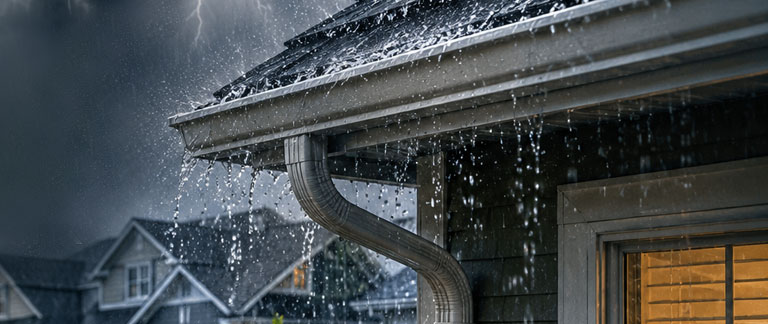
When homeowners think about summer home maintenance, they usually picture mowing the lawn, cleaning the deck, or servicing the air conditioner. Gutters rarely make the list, that is, until a heavy summer thunderstorm puts them to the test.
Unlike the steady rain often seen in spring, summer storms are frequently intense and fast-moving. When gutters are clean, properly pitched, and in good condition, all that water can be directed safely away from your home. However, when gutters are out of shape or filled with debris, heavy downpours can overwhelm them within minutes, sending water cascading over the sides instead of through the downspouts.
All that water can create expensive problems that aren’t always immediately visible. That’s why our Repair Director, Patrick McGuigan, recommends adding a gutter check to any homeowner’s seasonal home maintenance to-do list.
Even if your gutters appear fine on a sunny day, a severe thunderstorm can quickly reveal hidden gutter issues. Once the storm passes and you’re safe from harm, there are a few things to check your gutters for:
If you spot any of these issues, you know water ends up exactly where you don’t want it.
When gutters fail, water often collects around the foundation instead of moving safely away from your home. Repeated saturation can:
Foundation repairs are among the most expensive home repairs a homeowner can face. Keeping gutters functioning properly is one of the simplest ways to help reduce that risk.
When gutters clog, water can back up beneath the edge of the roof instead of draining away. Over time, that moisture can find its way into the roof decking and attic space.
Combined with summer’s heat and humidity, these damp conditions create an ideal environment for mold growth that can:
Addressing gutter issues early helps keep moisture outside where it belongs.
One of the first places damaged gutters impact is your landscaping. When gutters overflow, large volumes of water pour directly onto flower beds, shrubs, mulch, and lawn areas. Over time, this can:
If you’ve invested time and money into improving your home’s curb appeal, overflowing gutters can undo that work after just a few major storms.
Don’t wait for visible water damage to show on your home. Watch for these warning signs:
If you notice any of these issues, it’s time to have your gutters inspected or cleaned.
If your home is surrounded by trees, frequent gutter cleaning can become a recurring chore. A quality gutter protection system helps keep leaves, pine needles, and debris out while allowing rainwater to flow freely. This can:
While no system eliminates maintenance entirely, gutter protection can significantly reduce buildup and improve performance during severe weather.
Your gutters protect far more than your roofline. They help safeguard your landscaping, foundation, siding, attic, and even your home’s structural integrity. When it comes to protecting your home, functioning gutters aren’t just a convenience; they’re one of your home’s most important defense systems against water damage.
Before the next round of summer storms arrives, take a few minutes to inspect your gutters or schedule a professional evaluation. If you notice overflowing gutters, sagging sections, or water pooling near your foundation, contact PJ Fitzpatrick to discuss your gutter repair, replacement, or protection needs. Their experienced team can evaluate your gutters, recommend the right solution for your home, and help keep water flowing safely away, catching small problems now before they turn into significantly more expensive repairs later.
PJ Fitzpatrick, LLC
Connect With Us
Check out our social pages or our reviews page and let us know how we’re doing!
Our Services
Our Latest Blog Post