- Home Repairs
- Roofing
- Windows
- Siding
- Gutters
- Doors
- Baths
- Financing
- Specials
- Careers - We're Hiring!
- Recent Projects
- Do It Yourself
- Pay Bill
- Customer Service
- Live Chat
- Refer A Friend
- Online Estimate

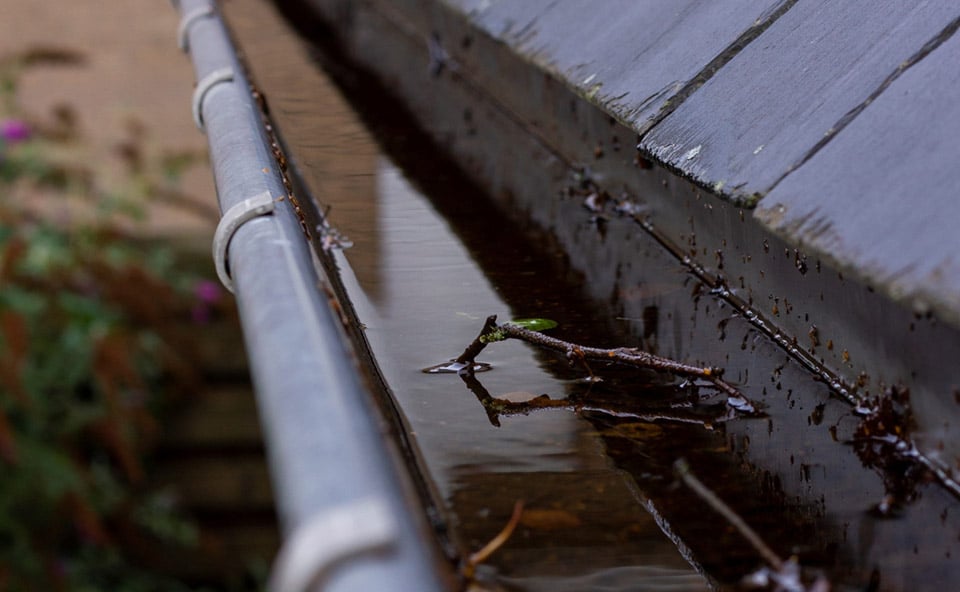
Gutters are designed to channel rainwater safely away from your home, protecting your roof, siding, foundation, and landscaping from water damage. However, if you notice standing water remaining in your gutters long after a rainstorm has passed, it’s a sign that something isn’t working correctly. Ignoring this issue can lead to overflowing gutters, premature gutter failure, roof leaks, wood rot, and even foundation problems.
Understanding what causes standing water in gutters and how to fix it can help you maintain your home’s drainage system and prevent costly repairs.
Standing water, sometimes called “ponding water,” occurs when water is unable to flow properly toward the downspouts. While a small amount of water may temporarily remain after a heavy storm, gutters should drain completely within a reasonable amount of time. Several issues can cause water to collect in your gutters after rain.
One of the most common causes of standing water in gutters is an incorrect slope. Gutters should be slightly angled toward the downspouts so gravity can move water through the system.
Over time, gutters can shift due to weather, age, loose fasteners, or the weight of debris and water. Even a small change in pitch can create low spots where water collects instead of draining properly.
Leaves, twigs, pine needles, roof granules, and other debris can restrict water flow and create blockages. While severe clogs often cause overflowing gutters during storms, partial blockages may allow some water through while leaving standing water behind. Downspout clogs can be particularly problematic because they prevent water from exiting the gutter system altogether.
Gutters that pull away from the fascia board or sag between hangers often develop pockets where water accumulates. These low areas trap water and place additional stress on the gutter system, increasing the likelihood of leaks and structural damage.
Bent sections, separated joints, rusted areas, and damaged gutter hangers can all interfere with proper drainage. Any component that affects the shape or alignment of the gutter system can contribute to standing water problems.
The appropriate solution depends on the underlying cause of the issue. While PJ Fitzpatrick recommends hiring a professional to safely and effectively repair your gutters, some tasks can be done by experienced homeowners.
Start by removing any debris from the gutters and downspouts. Use a gutter scoop or gloved hands to clear leaves and other materials. Once the debris is removed, flush the system with a garden hose to verify that water can flow freely.
If water backs up during the test, you may need to clear a downspout blockage using a plumber’s snake or a specialized gutter-cleaning attachment.
Run water through the gutters and observe how it drains. If water pools in certain sections, the gutter pitch may need adjustment.
Most gutter systems require a slight downward slope toward the downspout. Adjusting the pitch often involves repositioning hangers and re-securing sections to create proper drainage.
Loose or damaged hangers are a common cause of sagging gutters. Inspect all mounting hardware and tighten any loose fasteners. Replace broken hangers to provide proper support and restore the gutter’s alignment. Properly secured gutters are less likely to develop low spots where water can accumulate.
If you discover rust, holes, cracks, or separated seams, repairs should be completed promptly. Small leaks can often be sealed with gutter sealant, while severely damaged sections may require replacement. Addressing these issues early can prevent standing water from causing more extensive damage to your home.
If your gutters are older, heavily damaged, or repeatedly experiencing drainage problems, a full replacement may be the most cost-effective solution. Modern seamless gutter systems provide improved performance, fewer leak points, and better water management compared to aging sectional gutters.
Standing water may seem like a minor nuisance, but it can quickly create larger problems. Excess moisture can accelerate rust and corrosion, attract insects, damage fascia boards, contribute to roof leaks, and increase the weight placed on the gutter system.
Over time, the added stress can cause gutters to pull away from the home entirely, leading to expensive repairs that could have been avoided with early intervention.
If you’ve noticed standing water in your gutters after rain, it’s important to identify and correct the underlying cause before serious damage occurs. The gutter experts at PJ Fitzpatrick have inspected thousands of gutter systems and can identify drainage issues while recommending the most effective repair or replacement solutions. Whether your gutters need cleaning, realignment, repairs, or a complete upgrade, our experienced team is here to help. Contact PJ Fitzpatrick today to schedule a professional gutter inspection and keep your home protected from water damage year-round.
PJ Fitzpatrick, LLC
Connect With Us
Check out our social pages or our reviews page and let us know how we’re doing!
Our Services
Our Latest Blog Post