- Home Repairs
- Roofing
- Windows
- Siding
- Gutters
- Doors
- Baths
- Financing
- Specials
- Careers - We're Hiring!
- Recent Projects
- Do It Yourself
- Pay Bill
- Customer Service
- Live Chat
- Refer A Friend
- Online Estimate

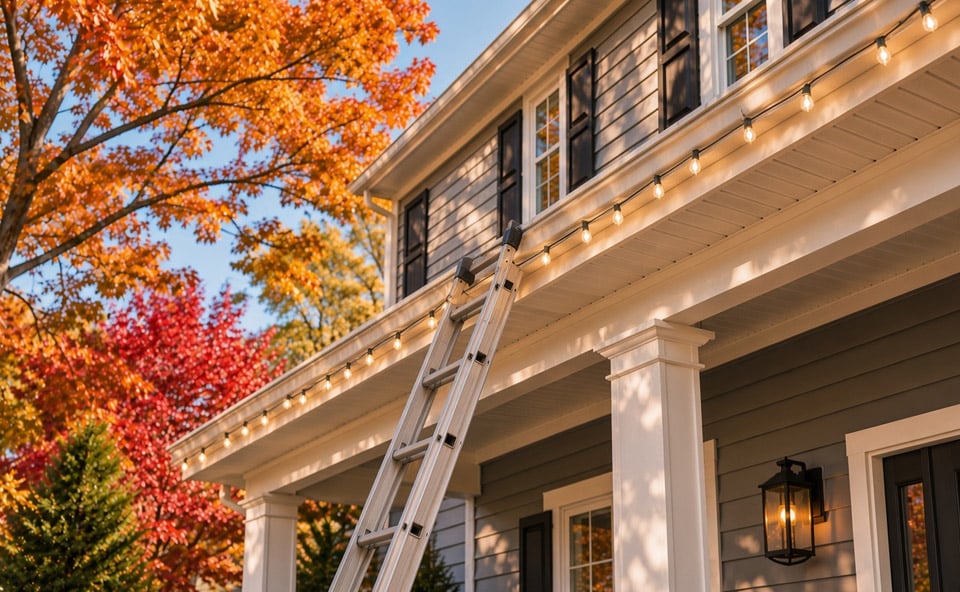
There is something special about a house that is lit up for the holidays. The colorful twinkle on a cold December night, neighbors and passersby slowing down to take it all in. It’s a tradition worth doing well.
It is also a project that sends a lot of people up ladders, onto roofs, and into tangled boxes of lights. To hang holiday lights safely, use outdoor-rated lights, gutter-safe clips, and a GFCI-protected outlet, and never work from a ladder in wet or windy weather. The details below cover what to do, what to avoid, and what to check on your home before you climb up.
Before you pull anything out of storage, take a few minutes to walk around your home and observe it from the street. Get measurements of any areas you plan to hang lights from, whether that’s your roofline, porch railing, or around the windows.
While you’re looking, check the spots you’ll be working:
This is a good time to spot small issues before winter weather arrives. Better to find them now than after the first storm.
| Do | Don’t |
|---|---|
| Use the right clips and hooks. Clips made for gutters, shingles, or siding hold lights in place without damaging your home. | Use nails, staples or tacks. They can pierce the wires, and leave holes in your siding, trim, or fascia that can let moisture in. |
| Work in good conditions. Pick a dry, calm day with decent light | Work in wet, icy, or windy conditions. Using a ladder and navigating rooflines becomes much riskier. |
| Check lights before hanging. Plug in each strand, check for frayed cords, and confirm the lights are safe for outdoor use. | Hang lights near power lines. Keep yourself, your ladder, and any long tools well away from overhead lines. |
| Plug into a GFCI-protected outlet. They shut off power quickly if they detect a problem. | Overload your outlets or extension cords. Add up what each circuit is carrying and check light labels to see how many strands can safely be connected. |
| Keep connections off the ground. Where cords meet extension cords, keep the connection up off wet grass, snow, or standing water. | Run cords through doors or windows that pinch them. A crushed cord can damage the wire inside. |
| Use a timer. An outdoor-rated timer turns your lights on and off automatically, saves energy, and means nobody has to unplug them at night. | Leave lights on around the clock. Even LEDs do not need to run all night, every night. |
| Keep a helper nearby. Someone to steady the ladder, hand up supplies, and call for help if needed. | Wrap lights around anything that holds heat. Keep strands away from dry greenery, wood piles, and other flammable materials. |
Most holiday lighting injuries happen from falls, not from the lights themselves. Here are our top tips to turn into your habits.
The same care applies at the end of the season. Unplug everything first, remove clips by hand instead of pulling on the cords, and wrap each strand loosely around a spool or cardboard so it’s ready for next year. Storing lights in a dry, labeled bin saves a lot of untangling later.
Hanging lights is one of the few times each year you get a close look at your gutters, roofline, and trim. If you notice sagging gutters, damaged shingles, loose siding, or soft spots along the fascia, those are worth taking care of before winter hits.
PJ Fitzpatrick is one of the few large home improvement companies with its own repair department, so whether the fix is small or something bigger, we can take a look and help you decide what makes sense for your home.
If you spot something while you’re decorating, or you would simply like a professional to check your home’s exterior before the winter weather arrives, we are happy to help. Schedule a free estimate with PJ Fitzpatrick, and enjoy the lights with peace of mind.
PJ Fitzpatrick, LLC
Connect With Us
Check out our social pages or our reviews page and let us know how we’re doing!
Our Services
Our Latest Blog Post