- Home Repairs
- Roofing
- Windows
- Siding
- Gutters
- Doors
- Baths
- Financing
- Specials
- Careers - We're Hiring!
- Recent Projects
- Do It Yourself
- Pay Bill
- Customer Service
- Live Chat
- Refer A Friend
- Online Estimate

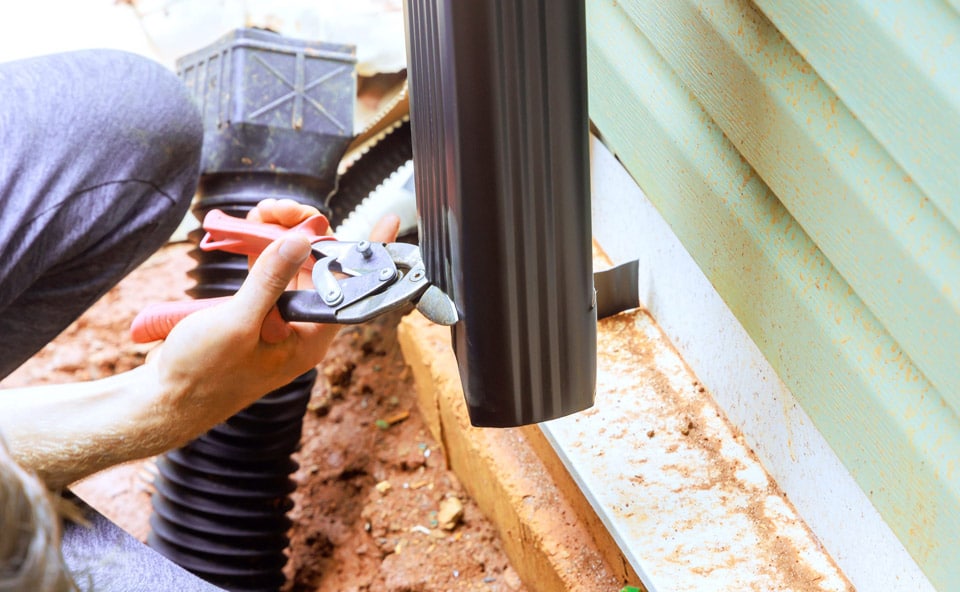
While many homeowners focus on keeping gutters clean and free of debris, the placement of gutter downspouts is equally important. Improperly positioned downspouts can allow large volumes of water to collect around the foundation, leading to costly structural problems over time. Understanding why proper gutter downspout placement matters can help you protect your home, avoid expensive repairs, and maintain the long-term integrity of your property.
Gutters are designed to capture rainwater as it runs off the roof. Once collected, water travels through the gutter channels and into downspouts, which direct it away from the home. Without properly functioning downspouts, water can overflow or discharge too close to the foundation.
A standard roof can collect hundreds or even thousands of gallons of water during a heavy rainstorm. If that water is not directed far enough away from the structure, it can saturate the soil surrounding the foundation and create conditions that threaten the stability of the home.
When downspouts terminate too close to the foundation, several issues can occur.
One of the most common problems associated with improper water drainage is foundation cracking. Excess moisture causes soil to expand and contract as it becomes wet and dry. This movement places pressure on foundation walls, which can eventually result in cracks.
Even small cracks can allow water infiltration, leading to additional damage and repair costs.
Water discharged near the foundation often finds its way into basements and crawl spaces. Over time, hydrostatic pressure can force moisture through foundation walls, resulting in damp conditions, standing water, or flooding.
Basement water intrusion can damage flooring, drywall, insulation, and personal belongings while creating an environment conducive to mold growth.
Poor downspout placement can wash away soil around the foundation. As soil erodes, voids may develop beneath walkways, patios, driveways, and even portions of the home’s foundation.
Erosion can also create uneven settling, which may lead to structural concerns and costly repairs.
Water concentrated in one area can damage flower beds, shrubs, and landscaping features. Mulch may wash away, plants may become oversaturated, and decorative hardscaping can shift or deteriorate over time.
Proper downspout placement helps preserve the appearance and health of your landscape while protecting your home’s foundation.
To maximize foundation protection, downspouts should direct water well away from the home’s perimeter.
In most situations, experts recommend extending downspouts at least 4 to 6 feet away from the foundation. In areas with poor drainage or expansive clay soils, even longer extensions may be beneficial.
Additional strategies include:
Many homeowners are unaware that their downspouts are contributing to drainage problems. Watch for these warning signs:
Proper downspout placement involves more than simply attaching an extension. Every property has unique drainage challenges based on roof size, lot grading, soil conditions, and landscaping features.
A professional gutter contractor can assess your home’s drainage needs and recommend solutions that effectively move water away from vulnerable areas. Whether your gutters require repairs, repositioning, additional downspouts, or a complete replacement, professional guidance can help ensure long-term foundation protection.
Most experts recommend directing water at least 4 to 6 feet away from the foundation. Some homes may benefit from longer extensions depending on soil conditions and property grading.
Yes. When water is discharged too close to the home, it can saturate the soil around the foundation and eventually seep into basements or crawl spaces.
Downspout extensions are often one of the simplest and most effective ways to improve drainage and protect your foundation from water damage.
Standing water can contribute to soil erosion, foundation settlement, cracks, and basement moisture issues. Addressing drainage problems quickly can help prevent costly repairs.
Not necessarily. In some cases, repositioning or extending existing downspouts may solve the issue. However, older or damaged gutter systems may benefit from a complete replacement.
A properly designed gutter system does more than manage rainwater. It protects your home’s foundation, landscaping, and structural integrity. If you’re experiencing drainage issues, water pooling near your home, or signs of gutter failure, the experts at PJ Fitzpatrick can help.
PJ Fitzpatrick provides professional gutter repair and gutter replacement solutions designed to protect your home from water damage year-round. Contact PJ Fitzpatrick today to schedule an inspection and discuss your gutter repair or replacement needs.
PJ Fitzpatrick, LLC
Connect With Us
Check out our social pages or our reviews page and let us know how we’re doing!
Our Services
Our Latest Blog Post